Before you hit Update, what’s in it for you?
On Android, browser updates usually show up when you’re doing normal stuff: a page loads slower on cellular than it used to, a site suddenly behaves weirdly, or you keep seeing the same “Update available” badge when you just want to search and move on. The real question isn’t “what’s new,” it’s whether the update will make your daily routine feel smoother without rearranging things you rely on.
What you’re typically getting is some mix of faster loading, fewer crashes, better compatibility with newer sites, and security fixes that reduce risk on sketchy pages or public Wi‑Fi. The cost is time and surprise: an update can shift a menu, change how tabs look, or reset a setting you didn’t even know you’d tweaked. That’s why the decision starts with urgency.
Do you actually need to update today or wait?
You’re about to open the browser, and the update prompt is sitting there like a speed bump. If you’re on solid Wi‑Fi, have your phone charged, and you’re not five minutes from needing to scan a boarding pass or sign a work document, updating now is usually the low-stress choice.
Update today if any of these are true: your browser has crashed recently, pages are failing to load on sites you use every day, or you regularly browse on public Wi‑Fi. Security fixes don’t always look “new,” but they matter most when you’re logging into accounts or tapping links from email and messages. Waiting makes more sense if you depend on a specific workflow—like a download manager behavior, a password prompt timing, or a tab layout—and you’re in the middle of something you can’t afford to re-check.
If you choose to wait, set a deadline: tonight on Wi‑Fi, not “someday.” Then you can test the feel change when you actually have time to adjust.
What will feel faster in your daily browsing routine?

You notice speed in small moments: the first page after you tap a link, how quickly the address bar responds, and whether switching tabs stutters when you’ve got a few heavy sites open. If the update includes performance work, those are the places you’ll feel it—less “blank white page” time, fewer hiccups when scrolling long feeds, and smoother jumps between tabs while something is still loading in the background.
The easiest way to tell is to use your normal routine for five minutes. Open the two or three sites you always open, switch between them, and do one search from the home screen widget (if you use it). If it feels snappier on cellular, that’s a real win. If it only feels faster on Wi‑Fi, the change may be smaller than you hoped.
One downside: a fresh version can rebuild caches for a bit, so the first few launches may feel slower before it settles. That’s also why the next thing to check is what changed quietly in privacy behavior.
Privacy changes you’ll notice without digging through settings
You’ll spot privacy changes when a site that used to “just work” suddenly asks again about cookies, or when an embedded video, map, or chat widget doesn’t load until you tap it. That’s usually tighter tracking protection in the background: more third‑party stuff gets blocked by default, so fewer companies can follow you across sites without you doing anything.
In daily use, the most obvious shift is fewer “personalized” ads that follow you from one shopping search to every news page, plus more frequent consent popups because sites can’t read the same identifiers. Some browsers also get stricter about clipboard access and location prompts, so a checkout page might stop auto-pasting a code, or a local search might ask you to allow location again.
The hassle is real: a bank login page, a paywall, or a “Continue with Google” button can fail until you refresh or open a private tab. If that starts happening, the next thing to verify is whether your saved logins and autofill still behave the way you expect.
Will tabs, history, and downloads behave the same?
You grab your phone for a quick check, and you’re already sitting on eight open tabs: a news site, a shopping cart, a doc you meant to finish, and a couple “I’ll read this later” pages. After an update, the most common change isn’t that tabs disappear—it’s that tab controls move or the grouping behavior feels different. If your browser starts auto-grouping tabs by site, or shows grid cards instead of a list, it can slow you down for a day because your thumb is trained to hit a specific spot.
History is usually intact, but the “recent” view can look different, and sometimes the default search inside history changes. The practical risk is small but annoying: you go to re-open something from yesterday and it takes longer to find because the filter or sort is new.
Downloads are where people get surprised. A new version might ask for storage permission again, change the default download folder, or show downloads inside the browser instead of kicking you to a file manager. Before you commit, download one small file and make sure you can find it fast—the next section is about the account stuff that’s harder to spot until it fails.
Logins, autofill, and sync: what to verify first
You usually don’t notice anything is wrong until you’re one tap away from paying a bill or signing into work and the login prompt doesn’t show up. Right after updating, do one quick “real” login on a site you trust and use all the time. If the password manager doesn’t offer the right account, open the browser’s password/autofill area and confirm it’s still set as the default provider and that you’re signed into the right browser profile.
Autofill is the next tripwire. Try a checkout or address form and watch what it fills: name, email, address, and card (if you store it). Updates sometimes reset what’s allowed to fill, or they start requiring screen lock before showing saved passwords or cards. That’s safer, but it can add an extra step every single time.
Finally, check sync with one simple test: open a tab on your phone, then confirm it appears on your other device (or in your “recent tabs” list). Then you can try the new features without risking your essentials.
Try the new features in five minutes, then decide
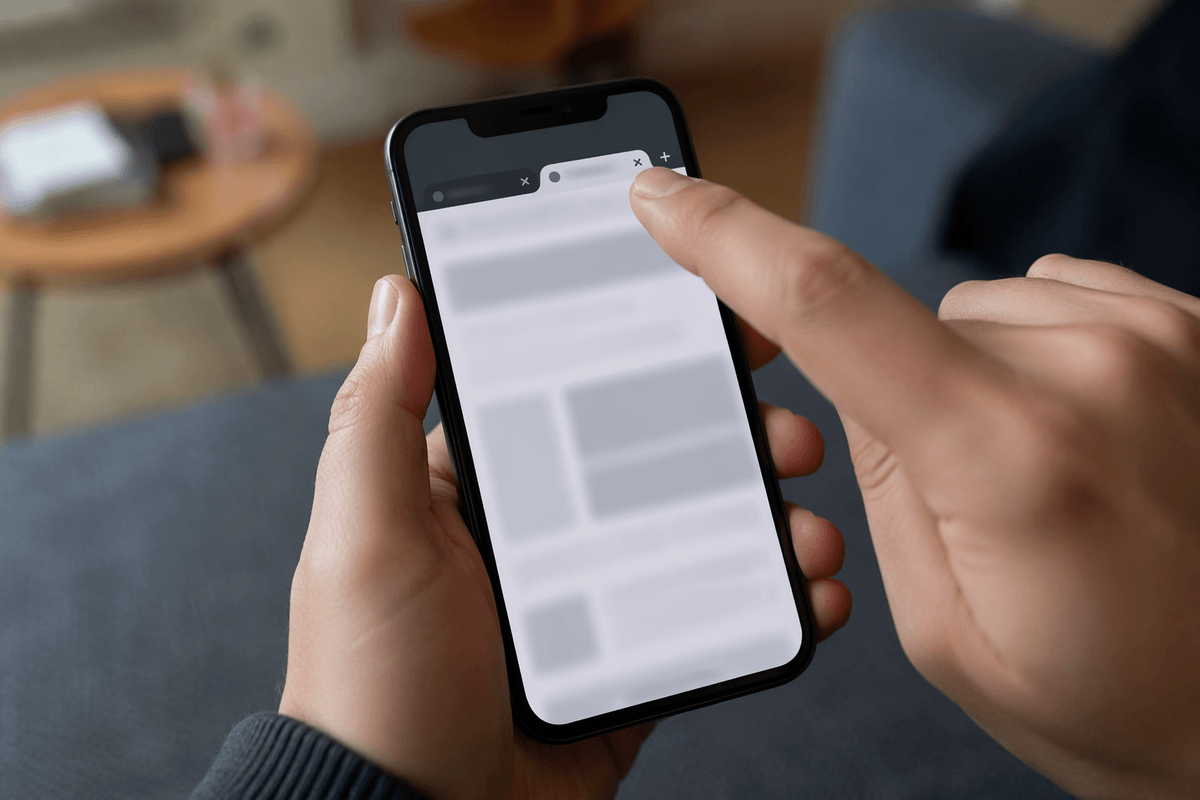
You don’t need a tour. You need a fast, controlled test that hits the stuff you actually touch every day, then you either keep the update or plan your exit.
Start with one “normal” task: open a familiar site, use the address bar, and switch tabs twice. Then try one feature that’s likely new or changed: long-press a tab to see if there are new options (like grouping, sharing, or “close other tabs”), open the overflow menu to spot anything new like a reading mode, downloads hub, or tracking report, and try the built-in search on a page (Find in page) to see if it got easier to reach.
Watch for the real cost: extra taps. If you have to hunt for tabs, downloads, or passwords, that friction will show up every day. If nothing feels worse after five minutes, keep it and move on to how to undo the update fast if it starts breaking your routine later.
If the update disrupts you, how to revert fast
You update, everything looks fine, then a day later something small breaks your rhythm: a site won’t stay logged in, downloads land in a new place, or the tab switcher changed just enough to slow your thumb down. When that happens, don’t start by uninstalling. Start by isolating what changed.
Force close the browser, reopen it, and try the same action once (download the same small file, sign into the same site, open the tab view). If it’s still off, clear only the site data for that one problem site (not “clear all browsing data”), and toggle any obvious switches like “group tabs,” “open links in new tabs,” or enhanced tracking protection. Those three moves fix a lot without nuking history and saved logins.
If it’s still disruptive, the fastest “revert” is usually rolling back the UI, not the app: change tab layout, reset the default download folder, and re-check your password/autofill provider. True app downgrades on Android often require uninstalling updates, and that can wipe local data unless sync is solid—so confirm sync before you pull that lever.
Make the call: update now with two quick checks
You’re usually deciding between “do it now while everything is calm” and “risk getting forced into it at the worst time.” If you have Wi‑Fi, 10 minutes, and you’re not about to need a ticket, bank login, or work doc, install the update.
Two quick checks make it a confident yes: (1) open one site you trust and sign in—confirm the password prompt and autofill still appear; (2) download one small file and find it immediately in the place you expect. If either one feels off, pause and fix that first.
Use a simple rule going forward: update when you can test your essentials right away, not when you’re in a hurry.